When to worry about foundation cracks
Most foundation cracks are harmless, and a few are not. Direction, width, offset and whether a crack is growing tell them apart, and a pencil, a ruler and a few months of patience answer most of the questions.
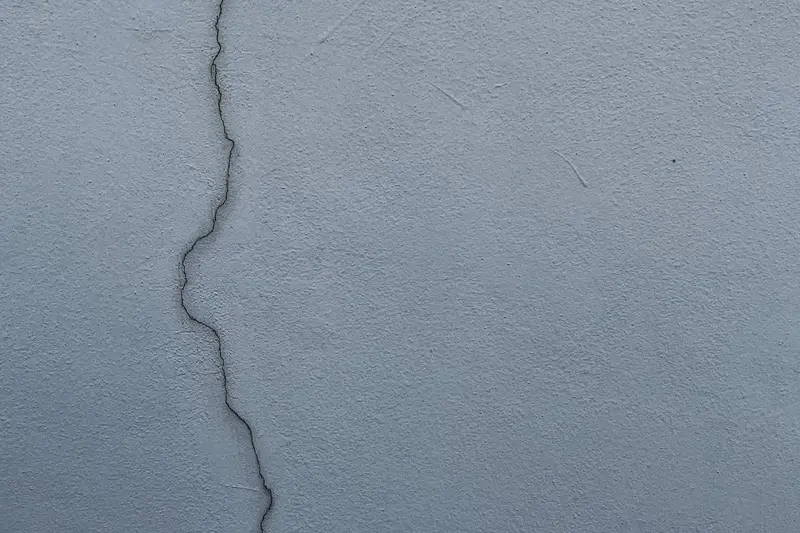
The short answer
| Crack | Usually means | Level of concern |
|---|---|---|
| Hairline, vertical, in a poured wall | Shrinkage as the concrete cured | Low; seal it if it leaks |
| Diagonal, wider at one end | A corner or end of the wall settling | Moderate; investigate |
| Horizontal, in a basement wall | Soil pressing on the wall | High; have it evaluated soon |
| Stair-step, in block or brick | Settlement or heave | Moderate to high |
| Any crack with one side offset | Movement | Investigate |
| Any crack that keeps growing | Active movement | Investigate |
Direction
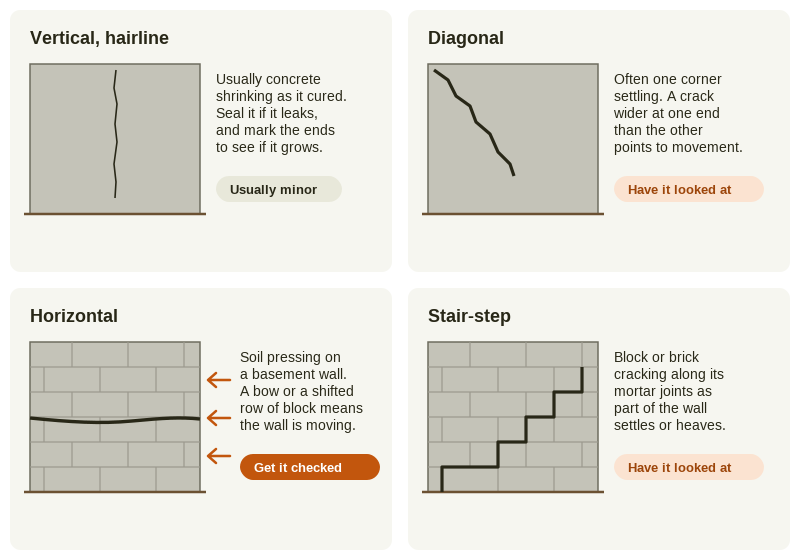
The direction of a crack says a lot about what caused it.
- Vertical cracks in poured concrete usually come from shrinkage. Concrete loses volume as it cures and dries, and long walls relieve that stress by cracking, often near the middle of a section or below a window.
- Diagonal cracks often start at a corner or the edge of an opening and run at an angle. They suggest one part of the wall moved relative to another, usually because a corner settled or heaved.
- Horizontal cracks in a basement or retaining wall mean the wall is being pushed sideways by the soil behind it. These are the cracks most worth acting on quickly.
- Stair-step cracks in block and brick follow the mortar joints. They come from the same settlement and heave that cause diagonal cracks in poured walls.
Width
Width matters, though movement matters more. As a rough sorting:
- Hairline, too thin to fit a fingernail into: almost always cosmetic.
- Up to about an eighth of an inch: common in older foundations. Seal it if it leaks, and monitor it.
- About a quarter inch or more: worth an evaluation.
A coin makes a handy gauge. If you can slide a dime edgewise into a crack, it is wider than most shrinkage cracks.
Offset and displacement
Look along the crack from the side. If one side sits higher than the other, or is pushed further out, the wall has moved, not just cracked. Offset is one of the strongest signs of structural movement, at any width. In block walls, look for blocks that have slid along a joint, or a row of block that sits further in than the rows above and below it.
Is it growing?
A crack that stopped moving years ago is history. A crack that is still moving is a problem in progress. To find out which you have:
- Clean the area around the crack.
- Draw a short pencil line across each end of the crack, and write the date beside it.
- Pick one spot, mark it, and measure the width there with a ruler or a crack card.
- Photograph it with the ruler in the frame.
- Recheck every month or two for a year, through at least one wet season and one dry one.
If the crack grows past its end marks, widens at your measuring point, or new cracks appear nearby, the movement is active. For more precision, a plastic crack monitor, available from hardware and engineering suppliers, shows movement in fractions of a millimeter.
Where the crack is
Location adds context. Cracks near the corners of the house, below downspouts, near big trees, and around windows and doors are more often tied to movement. A crack in the middle of a long wall, far from anything, is more likely shrinkage. In a basement, horizontal cracks at mid-height of the wall are the classic sign of soil pressure.
What comes with it
Cracks rarely travel alone when the foundation is moving. Look for these on the same side of the house:
- Drywall cracks at the corners of doors and windows
- Sticking doors and windows
- Sloping floors
- Stair-step cracks in the brick outside
One crack on its own is usually not much to worry about. A crack plus two or three of these is a pattern worth an inspection.
Cracks in slabs and garage floors
Concrete slabs almost always crack, mostly from shrinkage, and the cracks are usually cosmetic. Pay attention when one side of a slab crack sits higher than the other, when cracks continue into walls, or when floors slope near the crack. Garage floors often crack near the door where the backfill is deepest; see sinking concrete slab.
Cracks in brick veneer
Brick veneer cracks along its mortar joints. Hairline cracks in mortar alone are common. Wider cracks, displaced bricks, and cracks that keep reopening after repointing point to foundation movement below. Cracks right above windows and doors can also come from rusted steel lintels rather than the foundation.
Engineer or contractor?
For a crack that is clearly cosmetic, you may need neither. For anything wide, offset, horizontal or growing, a structural engineer gives an independent opinion about the cause and the right fix, with a sealed letter that holds up when you sell. Contractors can then bid on that scope. See foundation inspection for what a thorough evaluation includes.
What not to do
- Do not seal or paint over a crack before you know whether it is still moving; you erase the evidence.
- Do not let a single sales visit decide the repair, especially under time pressure.
- Do not ignore water. A crack that leaks needs sealing even if it is structurally harmless, and water coming through the wall often means drainage problems outside.
- Do not panic. Most cracks are not dangerous, and the serious ones usually develop over seasons, not days.
Once you know what you are dealing with, foundation crack repair explains how each kind of crack gets fixed, and the foundation cracks page covers the causes in more depth.
When to worry about foundation cracks — common questions
Are vertical foundation cracks serious?
Usually not. Thin vertical cracks in poured walls are typically from shrinkage as the concrete cured. They matter if they leak, widen, or have one side offset from the other.
What does a crack monitor do?
A crack monitor is a two-piece plastic gauge fixed across a crack, with a grid that shows movement to a fraction of a millimeter. It is a more precise version of marking the crack with a pencil and measuring it over time.
Should I worry about cracks in a new house?
Hairline cracks in the first year or two are common. Report anything wider, offset or growing to the builder in writing, with photos, while the warranty is active.
More foundation repair guides
Want the house looked at?
Call and describe the cracks, floors or doors that worry you, or use the form and a local pro will be in touch.