House leveling in Cary, NC
Leveling lifts the parts of a house that have dropped back toward where they started. Done slowly, on supports that will not move again, it can close cracks, free sticking doors and flatten floors, though rarely all the way to perfect level.
- Elevation survey before and after the lift
- Lifting on steel piers or new crawl space supports
- Slow, monitored lifts to limit new cracking
- Doors, windows and plumbing checked as it rises
- Written results you can show a buyer
Covering Cary · Apex · Holly Springs · Morrisville · Raleigh
Get a quote for house leveling
Cause first, then the fix
Cracks and sticking doors are symptoms. Every visit looks for what moved the house, usually water in clay soil, before anyone talks about piers.
Measured, not guessed
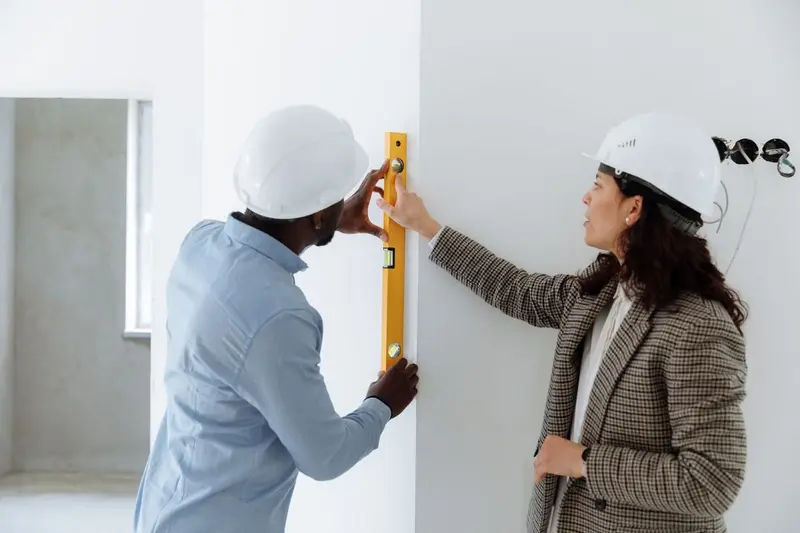
Floor elevations are taken across the house with a level, so the repair plan rests on numbers you can see and compare.
A written plan and price
The number of piers, where they go, any drainage work, engineer letters, permits and the warranty, listed line by line in writing.
Why choose us
Repairs that stop the movement, not just hide it
Triangle clay swells when it is wet and shrinks when it dries, and houses ride along. Finding why the house moved, supporting it on something that does not, and fixing the water behind it are what keep a repair from failing.
- Floor elevations measured
- Push and helical piers
- Engineer-backed plans
- Drainage fixed at the source
- Written, itemized estimates
- Local to Cary
When leveling makes sense
Leveling is worth considering when a section of the house has dropped enough to cause real problems: floors you can feel slope, doors that will not close, cracks that keep reopening, or cabinets and counters pulling away from the walls. It only makes sense once the cause is understood and the new supports will hold. Lifting a house back onto the same soil that let it down just resets the clock.
It is not always needed, either. A house that settled years ago and has since stopped moving may be better left where it is, with doors rehung and trim adjusted instead.
Measure first: the elevation survey
Leveling starts with numbers. A technician takes floor readings at many points across the house with a digital level or a laser, usually relative to one reference point. The readings are drawn as a map showing the high and low areas, the difference between them, and whether the problem is settlement, with low edges or corners, or heave, with a high middle. The same survey is repeated after the lift, so you can see exactly what changed.
How a house is lifted
- On piers. For slab and perimeter footings, the steel piers that stabilize the house double as lifting points. Hydraulic jacks at each pier are connected to one manifold, so several lift together, a fraction of an inch at a time. See foundation piers.
- From the crawl space. Under the floor, girders are raised with jacks on temporary cribbing, then set on new or rebuilt supports at the new height. See crawl space foundation repair.
- Slab sections. Sunken interior areas of a slab can sometimes be raised with injected foam or grout. See slab foundation repair.
Why it is done slowly
A house that has sat out of level for years has adapted to it. Drywall was patched in its sunken position, door frames were trimmed to fit, and the framing has taken a set. Lifting too fast or too far concentrates stress in all of those places at once. Experienced crews lift in small increments, watch doors, windows and existing cracks as they go, and stop when the structure starts to resist. Older houses with plaster walls and houses with tile floors call for extra patience.
What to expect afterward
- Cracks that opened as the house settled often narrow or close.
- Some doors need adjusting again, since they were trimmed to fit the sunken frame.
- New hairline cracks can appear in drywall and caulk joints.
- Plumbing should be checked, especially drain lines under slabs.
- Floors are measured again, and the readings go in your file with the permit and warranty.
How far a house can come back
Few houses return to dead level, and nobody should promise it. New construction is not perfectly level either, and small variations across a floor are normal. Practical goals are a floor that does not feel sloped, doors and windows that work, and cracks that close. The sloping floors page explains how floor slope is judged and when it is worth correcting.
Leveling older houses
Older Raleigh and Cary homes on brick piers can often be re-leveled successfully from the crawl space, but they can also hide surprises: rotted sills, joists notched for old plumbing, or remodels that removed walls without adding beams. Those get repaired as they turn up, so expect a quote for an older house to include allowances for framing work.
Leveling newer houses
In newer subdivisions, leveling usually follows settlement of one corner or one side, often on fill soil or where water collects. These houses tend to lift more predictably, but drywall corners and tile still need watching, and builders’ warranty paperwork is worth checking first. See foundation settlement repair.
Keep it level
Once the house is level, the same forces that moved it can still move the parts that were not supported: water at the foundation, trees close to the house, and long dry spells. Keep gutters clean, downspouts piped away and the ground sloping away from the walls. See foundation drainage.
House leveling — common questions
Can my house be made perfectly level?
Rarely, and it should not be forced. Houses are built with small variations, and framing that has sat out of level for years adjusts to its new shape. The aim is to recover as much as the structure will safely allow, stopping when cracks close or resistance builds.
Will leveling crack my walls?
Some new cracking is possible, especially in plaster, tile and drywall that was already patched in its settled position. Lifting slowly reduces it. Most contractors exclude cosmetic repairs from the price, so plan for some patching and painting afterward.
How long does house leveling take?
Lifting a section on piers is usually done in a single day once the piers are in. Crawl space re-leveling is sometimes done in stages over several visits, giving the framing time to adjust between lifts.
Problems this fixes
Often booked with this