Drywall cracks: when they point to the foundation
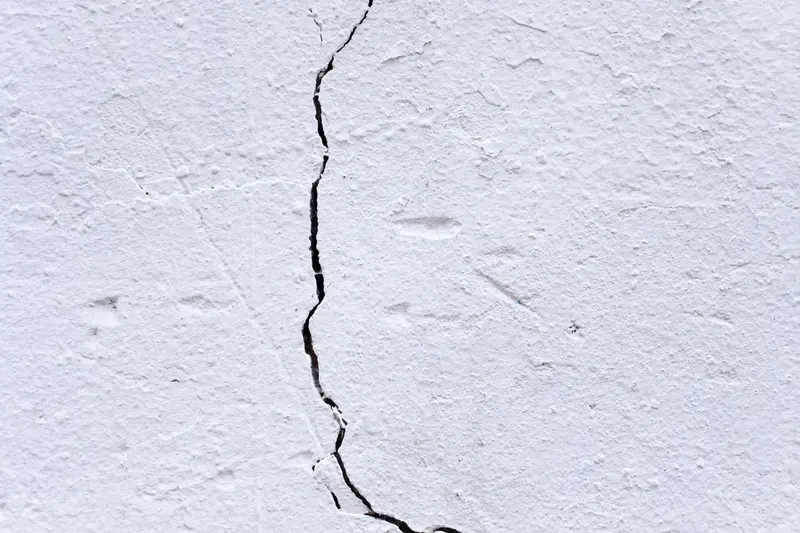
Cracks in drywall are common, and most are harmless, caused by lumber drying, seasonal humidity or the way roof framing moves. A few patterns, though, are classic signs that the foundation below has moved.
What you may notice
- Diagonal cracks running from the corners of doors and windows
- Cracks that reopen after they are patched
- Cracks where walls meet the ceiling
- Gaps opening between walls and the ceiling or floor
- Nail pops or tape lines showing at the seams
Tell us about the house
Cause first, then the fix
Cracks and sticking doors are symptoms. Every visit looks for what moved the house, usually water in clay soil, before anyone talks about piers.
Measured, not guessed
Floor elevations are taken across the house with a level, so the repair plan rests on numbers you can see and compare.
A written plan and price
The number of piers, where they go, any drainage work, engineer letters, permits and the warranty, listed line by line in writing.
Cracks that are usually not the foundation
- Seam and corner cracks along the tape lines, in straight lines, caused by framing lumber drying and shrinking.
- Nail and screw pops: small round bumps or circles where fasteners have worked loose.
- Truss uplift: cracks or gaps where interior walls meet the ceiling, appearing in winter and closing in summer.
- Spiderweb cracks in old plaster, from age and vibration.
- Cracks above doors that get slammed, at the corners of the frame where the jolt is concentrated.
Cracks that often are
- Diagonal cracks from the corners of doors and windows, especially ones wider at one end.
- Several cracks in one area of the house, with a sloping floor or a sticking door nearby.
- Cracks that come back after patching, or that grow over months.
- Gaps between walls and floors as baseboards pull away.
- Cracks that line up with outside cracks in brick, block or the foundation wall.
Why openings crack first
Doors and windows interrupt a wall’s framing, and their corners concentrate stress when the wall moves. That is why movement shows up as cracks running from the corners of frames, often diagonally toward the ceiling or the floor. The direction and width of those cracks give an engineer clues about which part of the house moved, so photograph them before anyone patches them.
Plaster walls in older homes
Older Raleigh and Cary houses with plaster walls show movement more readily than drywall, because plaster is rigid and brittle. Cracks in old plaster can be the record of decades of minor movement rather than anything happening now, and the keys holding plaster to its lath can loosen with time, letting sections sag. A wall full of old plaster cracks says little on its own. Measuring the floors tells you far more about whether the house is still moving.
Track it
Draw a pencil line across each end of the crack, write the date beside it, and photograph it with a ruler in the frame. Check again after a few months, ideally across a wet season and a dry one. Cracks that grow, or new cracks appearing nearby, call for an inspection. Cracks that stay put through a full year are usually historic, which means a cosmetic repair can hold.
What fixes it
- Cosmetic cracks: tape, joint compound and paint, ideally with mesh tape and a flexible compound for corners that keep cracking.
- Truss uplift: drywall clips or flexible corner trim that let the ceiling float independently of the wall. It is a framing detail, not a foundation repair.
- Foundation movement: stabilize first, with foundation settlement repair or crawl space foundation repair, then repair the walls.
Matching inside and outside
When you find a crack inside, walk outside to the same spot. A diagonal drywall crack above a bedroom window with a stair-step crack in the brick beneath the same window, on the same side of the house, is a much stronger sign of foundation movement than either crack alone. Note the corner of the house nearest both, and look at the gutter and downspout there; a downspout emptying at that corner is often where the story starts.
Cracks in ceilings
Ceiling cracks that run across the middle of a room usually follow drywall seams and come from framing or humidity. Ceiling cracks that run along an interior wall, together with sticking doors in that wall, can point to interior crawl space piers settling and pulling the wall down with them. See cracked crawl space piers.
When to call
Call for an inspection when cracks come with sloping floors, sticking doors, outside cracks or growing widths. See foundation inspection, and the guide to which cracks matter for the foundation side of the picture.
Drywall cracks — common questions
Are hairline cracks in new drywall normal?
Yes. New houses often get small cracks at seams and corners in their first year or two as framing lumber dries and the house settles slightly. Builders commonly fix them at the one-year walkthrough.
Why do cracks appear where my ceiling meets the wall in winter?
Often truss uplift. In winter, the top of a roof truss stays cold and damp while the bottom, buried in attic insulation, stays warm and dries out, so the truss bows upward and lifts the ceiling off interior walls. The gap usually closes again in summer, and it is not a foundation problem.
Should I patch drywall cracks before foundation repair?
No. Patch once the foundation is stable and any lifting is finished, because lifting can open some cracks and close others. Patch too early and you will patch twice.
Other foundation problems
Not sure what is causing it?
Call and describe what you are seeing and where in the house, or send the details and someone will follow up.