Basement wall repair in Cary, NC
Basement walls hold back the soil around the house, and Triangle clay pushes hard when it is wet. Walls that crack horizontally, bow inward or slide at the bottom can be stabilized, and sometimes straightened, long before they fail.
- Carbon fiber straps for early bowing
- Steel wall braces anchored top and bottom
- Wall anchors that can recover movement over time
- Excavation and rebuilding for severe walls
- Drainage fixed to take pressure off the wall
Covering Cary · Apex · Holly Springs · Morrisville · Raleigh
Get a quote for basement wall repair
Cause first, then the fix
Cracks and sticking doors are symptoms. Every visit looks for what moved the house, usually water in clay soil, before anyone talks about piers.
Measured, not guessed
Floor elevations are taken across the house with a level, so the repair plan rests on numbers you can see and compare.
A written plan and price
The number of piers, where they go, any drainage work, engineer letters, permits and the warranty, listed line by line in writing.
Why choose us
Repairs that stop the movement, not just hide it
Triangle clay swells when it is wet and shrinks when it dries, and houses ride along. Finding why the house moved, supporting it on something that does not, and fixing the water behind it are what keep a repair from failing.
- Floor elevations measured
- Push and helical piers
- Engineer-backed plans
- Drainage fixed at the source
- Written, itemized estimates
- Local to Cary
Why basement walls crack and bow
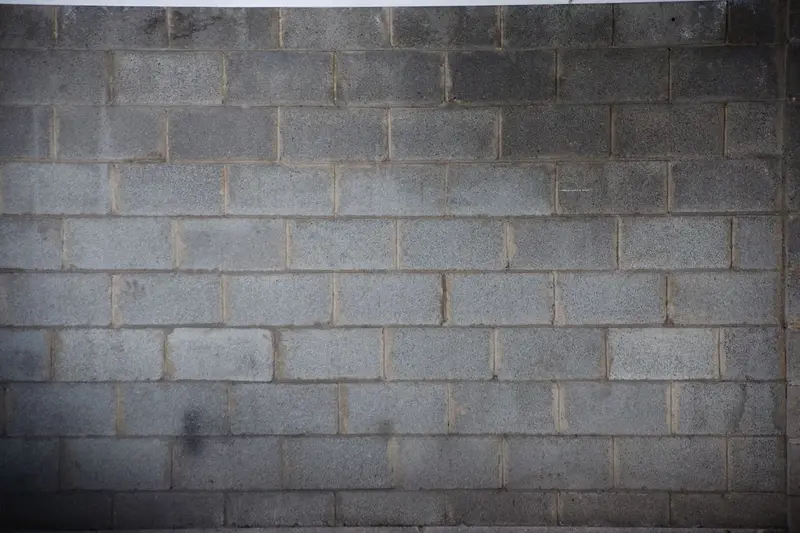
A basement wall is a retaining wall with a house on top. The soil outside pushes sideways on it all the time, and the push grows when the soil is wet: saturated clay is heavier, water adds its own pressure, and expansive clay swells against the wall. Block walls, built from hollow units held together by mortar, resist that push less than poured concrete, so they tend to crack along a mortar joint partway up and bow inward there. Poured walls usually show a horizontal or diagonal crack before any visible bowing.
Basements are less common in the Triangle than crawl spaces, but they turn up in older Raleigh houses, on sloping lots with walk-out basements, and in some newer subdivisions. Many of them are surrounded by exactly the kind of clay that pushes hardest when it is wet.
Warning signs
- A horizontal crack along a mortar joint or across a poured wall
- A bulge you can see when you look along the face of the wall
- Cracks stepping up through the block near the corners
- The bottom of the wall sliding inward past the floor slab
- The top of the wall leaning in, or a gap opening between the wall and the framing above
- Damp patches or seepage along the cracks after a storm
The bowing basement walls page explains how to measure the movement yourself.
Carbon fiber straps
Strips of carbon fiber are bonded to the wall with epoxy every few feet, running from the footing to the framing above. They are thin, barely noticeable once painted, and very strong in tension. They suit walls with limited movement and stop further bowing, but they do not straighten a wall that has already moved.
Steel wall braces
Steel beams are set vertically against the wall, anchored into the floor slab or footing at the bottom and fastened to the floor framing at the top. Some systems can be tightened over time to nudge the wall back. They take a few inches of floor space in front of the wall, which matters in a finished basement.
Wall anchors
Steel rods run through the wall to plates buried in the yard, out beyond the soil that is pushing on the wall. Plates on the inside face are tightened against the rods. Anchors can recover some movement gradually and are often used for walls that have moved more than straps can handle. They need room in the yard, clear of driveways, patios and utility lines, where the outside plates go.
Excavating and rebuilding
Walls that have moved too far, are sliding at the base or are crumbling get excavated from the outside, then straightened or rebuilt. While the outside of the wall is exposed, drainage and waterproofing are added at the same time, which addresses the cause as well as the damage.
Relieve the pressure
Every wall repair should come with changes outside: gutters cleaned and downspouts piped well away, soil graded so water drains away from the wall, and sometimes a drain at the footing. Less water against the wall means less force on it, and on whatever is holding it. See foundation drainage and basement waterproofing.
Finished basements
Repairs are easiest on bare walls. In a finished basement, the drywall and framing along the affected wall have to come off for straps, braces or anchors and go back afterward. A wall bowing behind finished drywall may show up only as a crack at the ceiling line, a gap at the baseboard, or a door upstairs that has started to stick.
Cost and timing
National cost guides put carbon fiber or steel straps at roughly $350 to $1,000 each, usually spaced about every four feet, and wall anchors at roughly $400 to $700 each. Most wall stabilizations take a day or two. Excavation and rebuilding cost considerably more. The cost guide has the full picture, and foundation crack repair covers sealing the cracks once the wall is stable.
Basement wall repair — common questions
How much bowing is too much?
Any bowing means the wall has moved and should be evaluated. As a rough guide, contractors often reserve carbon fiber for walls that have moved less than about two inches, use braces or anchors for more, and consider rebuilding walls that have moved several inches or are sliding at the base.
Can a bowed basement wall be pushed back?
Sometimes partly. Wall anchors and some steel brace systems can be tightened gradually, often after the soil outside is dug out to relieve the pressure, recovering part of the bow. Carbon fiber holds a wall where it is but does not straighten it.
Why do basement walls bow?
The soil outside pushes against the wall, and that push rises sharply when clay is saturated or swelling. Downspouts emptying beside the wall, poor grading and missing footing drains all add to it. Block walls bow more readily than poured concrete.
Problems this fixes
Often booked with this