Brick foundation repair in Cary, NC
Brick and block foundations last for generations, but their mortar joints crack when the ground moves and soften with age and moisture. Repair ranges from repointing a few joints to rebuilding piers and wall sections on new footings.
- Cracked mortar joints repointed
- Damaged brick and block replaced
- Crawl space piers rebuilt on new footings
- Veneer cracks and rusted lintels repaired
- Mortar matched for older homes
Covering Cary · Apex · Holly Springs · Morrisville · Raleigh
Get a quote for brick foundation repair
Cause first, then the fix
Cracks and sticking doors are symptoms. Every visit looks for what moved the house, usually water in clay soil, before anyone talks about piers.
Measured, not guessed
Floor elevations are taken across the house with a level, so the repair plan rests on numbers you can see and compare.
A written plan and price
The number of piers, where they go, any drainage work, engineer letters, permits and the warranty, listed line by line in writing.
Why choose us
Repairs that stop the movement, not just hide it
Triangle clay swells when it is wet and shrinks when it dries, and houses ride along. Finding why the house moved, supporting it on something that does not, and fixing the water behind it are what keep a repair from failing.
- Floor elevations measured
- Push and helical piers
- Engineer-backed plans
- Drainage fixed at the source
- Written, itemized estimates
- Local to Cary
Brick and block foundations in the Triangle
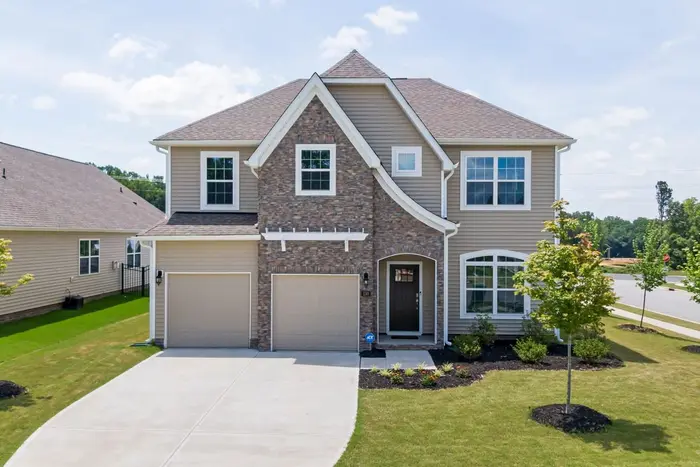
Older houses around Raleigh, Cary and the Triangle’s small-town downtowns often rest on brick: perimeter walls of solid brick and rows of brick piers in the crawl space. From around the middle of the twentieth century, concrete block became the standard for crawl space walls and piers, often faced with brick where the wall shows above ground. Most newer “brick” houses have brick veneer, a single layer of brick tied to the wood-framed wall and resting on a ledge of the foundation.
All of them depend on mortar joints, and all of them crack in recognizable ways when the foundation moves.
Common problems
- Stair-step cracks that follow the mortar joints, from settlement or heave. See stair-step cracks in brick.
- Crumbling or recessed mortar from age, moisture and wear.
- Spalling brick, where the face flakes off, often from trapped moisture or mortar that is harder than the brick.
- Leaning or cracked piers under the house. See cracked crawl space piers.
- Cracks above windows and doors where steel lintels have rusted and expanded.
- Bulging walls, where the layers of an old solid brick wall have separated.
Repointing
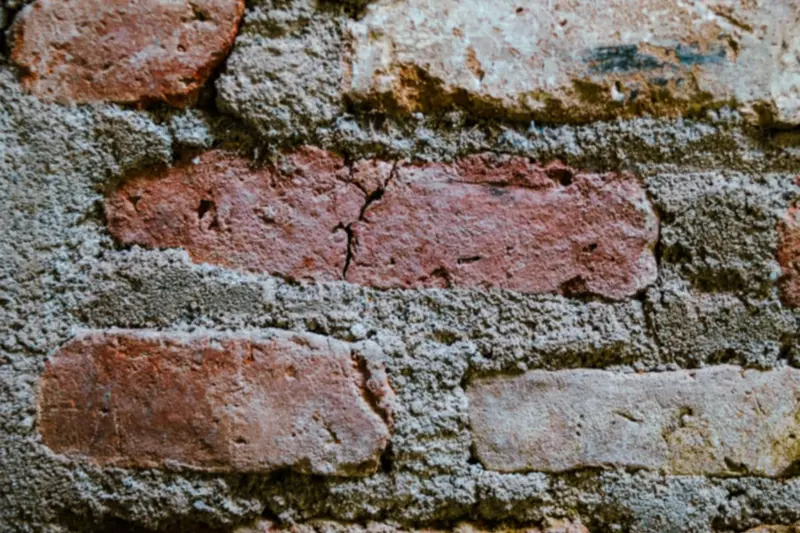
Cracked and loose mortar is raked out to a consistent depth and replaced with new mortar, packed in layers and tooled to match the original joints. On older homes the mortar is matched for hardness, color and texture, because mortar that is harder than the brick forces the brick to take the stress, and the brick faces start to crack and flake.
Brick and block replacement
Cracked, spalled or loose units are cut out and replaced with matching brick or block, toothed into the surrounding wall so the repair carries load like the original. Salvaged brick is often the best match on older houses.
Rebuilding crawl space piers
Piers that have cracked, leaned or sunk are rebuilt: the girder is temporarily supported, the old pier is taken down, a new concrete footing of the right size is poured, and a new pier is laid up to the correct height so it bears fully on the girder. See crawl space foundation repair.
Lintel repair
Steel angles over windows and doors rust over time, and rust takes up more space than the steel it came from, lifting the brick above and cracking the corners of the opening. Lintels are cleaned and painted where the rust is light, or replaced, and the cracked brick above them is rebuilt.
Fix the movement before the masonry
Repointing a crack in a wall that is still settling only lasts until the next move. If cracks are wide, keep reopening, or show one side offset from the other, the foundation needs to be stabilized first, with piers under the settling section (see foundation piers) and the water around the foundation managed (see foundation drainage). Then the masonry is repaired once.
Veneer cracks and water
Cracks in brick veneer let rain in behind it. Behind the veneer there should be an air space, a water-resistant barrier and weep holes at the bottom that let water out. Clogged weep holes, or mortar droppings that fill the air space, keep the wall wet. Seal the cracks after the cause is fixed, and keep soil and mulch below the weep holes.
Matching the look
New mortar rarely matches old mortar straight out of the bag. Good masons mix small test batches, let them cure, and compare them against the original wall before repointing a large area, adjusting sand color and pigment until the joints blend in. Joint profile matters as much as color: a concave joint next to a flush one stands out from the street. Replacement brick is matched for size, color and texture, and salvaged brick from the same era often blends best.
Historic houses
In Raleigh’s historic districts, such as Oakwood and Boylan Heights, many exterior changes need a certificate of appropriateness from the Raleigh Historic Development Commission. Repairs in matching materials are often handled as minor work, but check before starting, and keep samples of the original brick and mortar for matching.
Brick foundation repair — common questions
Why does the mortar in my brick foundation crumble?
Mortar is meant to be the softer, sacrificial part of a masonry wall. Over decades, moisture, salts and movement wear it down, and older lime-based mortars are softer to begin with. Joints that are crumbling or recessed should be repointed before bricks start to loosen.
Can cracked brick veneer cause structural problems?
On most Triangle houses the brick is a veneer tied to a wood-framed wall, so cracks in it do not weaken the structure directly. They do matter, both as evidence that the foundation moved and because they let rain in behind the brick.
Should old brick be repointed with modern mortar?
Not always. Hard modern mortar can damage softer old brick, because the brick ends up taking the stress instead of the joint. Older homes are usually repointed with a softer mortar matched to the original.
Problems this fixes
Often booked with this