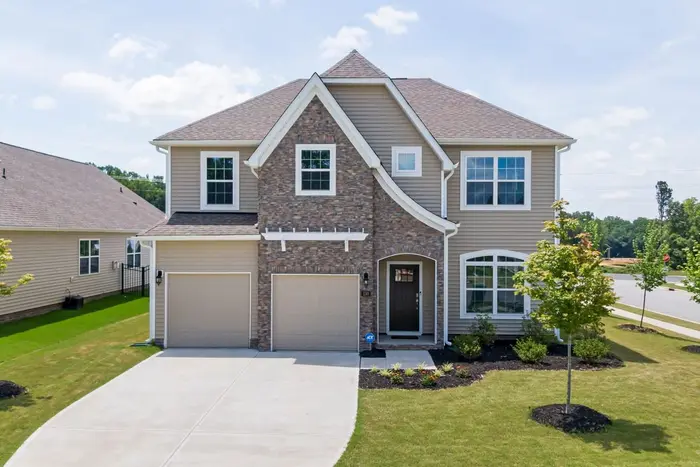
Concrete leveling in Cary, NC
Sidewalks, patios, steps and garage floors sink when the soil under them settles or washes out. Instead of tearing them out, most can be lifted back into place by pumping foam or a cement slurry underneath.
- Polyurethane foam lifting
- Mudjacking with cement-based slurry
- Patios, walks, steps, driveways and garage floors
- Voids under slabs filled
- Joints sealed afterward
Covering Cary · Apex · Holly Springs · Morrisville · Raleigh

Get a quote for concrete leveling
Cause first, then the fix
Cracks and sticking doors are symptoms. Every visit looks for what moved the house, usually water in clay soil, before anyone talks about piers.
Measured, not guessed
Floor elevations are taken across the house with a level, so the repair plan rests on numbers you can see and compare.
A written plan and price
The number of piers, where they go, any drainage work, engineer letters, permits and the warranty, listed line by line in writing.
Why choose us
Repairs that stop the movement, not just hide it
Triangle clay swells when it is wet and shrinks when it dries, and houses ride along. Finding why the house moved, supporting it on something that does not, and fixing the water behind it are what keep a repair from failing.
- Floor elevations measured
- Push and helical piers
- Engineer-backed plans
- Drainage fixed at the source
- Written, itemized estimates
- Local to Cary
Why slabs sink
Most sunken slabs around a house sit on soil that was disturbed during construction. When a foundation is built, the ground around it is dug out and then backfilled after the walls go up. That backfill is often loose, and it settles for years, taking the patio, stoop, front walk or garage apron down with it. Other causes:
- Downspouts and gutters washing soil out from under slab edges
- Erosion under walks and driveways on slopes
- Plumbing leaks under garage slabs
- Clay shrinking under slabs during drought
- Tree roots lifting one side while the other sinks
Signs a slab needs attention
- Patios and walks that tilt toward the house, sending rain at the foundation
- Steps pulling away from the house or tipping forward
- Trip ledges where slab sections meet
- Garage floors cracked and sunk near the door
- Hollow-sounding areas when you tap the slab
The sinking concrete slab page goes through the causes in more detail.
Foam lifting
Small holes, about five-eighths of an inch across, are drilled through the slab. A two-part polyurethane foam is injected underneath, where it expands to fill voids and lifts the slab gradually while the crew watches the levels. The foam weighs very little, so it barely loads the soil, and it cures within minutes; most slabs can be walked on almost immediately and driven on the same day. The holes are patched with cement-based grout.
Mudjacking
Mudjacking, also called slabjacking, pumps a cement-based slurry under the slab through larger holes, typically one to two inches across. The slurry fills voids and lifts the slab. It costs less than foam and works well for many slabs, but the material is heavy, the patched holes are larger and more visible, and it needs longer to cure before heavy use.
What leveling costs
National cost guides put mudjacking at roughly $3 to $6 per square foot and polyurethane foam at roughly $5 to $25 per square foot, with typical mudjacking jobs averaging around $1,200. Replacing a slab usually costs considerably more, and a new slab poured on the same soil can sink just like the old one if the cause is not fixed.
Slabs that tilt toward the house
A patio or walk that tilts toward the house sends rain at the foundation, which makes it a foundation problem in its own right. Leveling those slabs so they drain away, and sealing the joint where slab meets house, is often part of a drainage plan. See foundation drainage.
Garage floors and house slabs
Garage floors are usually separate slabs and can be lifted much like a patio. Lifting the main slab of a house is different: interior sections can sometimes be raised with foam, but anything involving footings or bearing walls is a foundation repair. See slab foundation repair.
Steps and stoops
Most front steps are poured as their own block of concrete, resting on backfill. When the backfill settles, they tip away from the house, leaving a gap that lets water into the wall behind them. Solid steps can often be lifted back with foam; hollow steps, or steps that are crumbling or cracked through, may need to be replaced. Seal the joint to the house afterward.
Driveways
Driveway panels often sink at the garage end, where the backfill against the foundation is deepest, and at the street end, where soil washes out along the curb. A panel that drops more than about half an inch catches tires and lawn mowers and lets water run under the slab. Lifting a sunken panel early, before it cracks under the weight of cars, is usually far cheaper than replacing it later.
After the lift
Joints and cracks are sealed with a flexible sealant to keep water from getting under the slab again, and downspouts that empty beside slabs are redirected. It is worth checking lifted slabs after the first wet season; a slab that stays put through a few storms is usually stable for the long haul.
Concrete leveling — common questions
Is foam or mudjacking better?
Foam is lighter, needs smaller holes, cures in minutes and adds little weight to weak soil, but it costs more. Mudjacking costs less and works well for many slabs, with larger holes and a longer cure. The slab, the soil and the budget decide.
How long does concrete leveling last?
If the soil underneath stays stable, many years. If water keeps washing soil out from under the slab, it can sink again, which is why downspouts, joints and drainage get fixed along with the lift.
Can any sunken slab be lifted?
Not all of them. Slabs that are badly broken, crumbling or very thin may crack further when lifted and are better replaced. A slab worth lifting is one solid piece or a few large ones.
Problems this fixes
Often booked with this