Stair-step cracks in brick and block
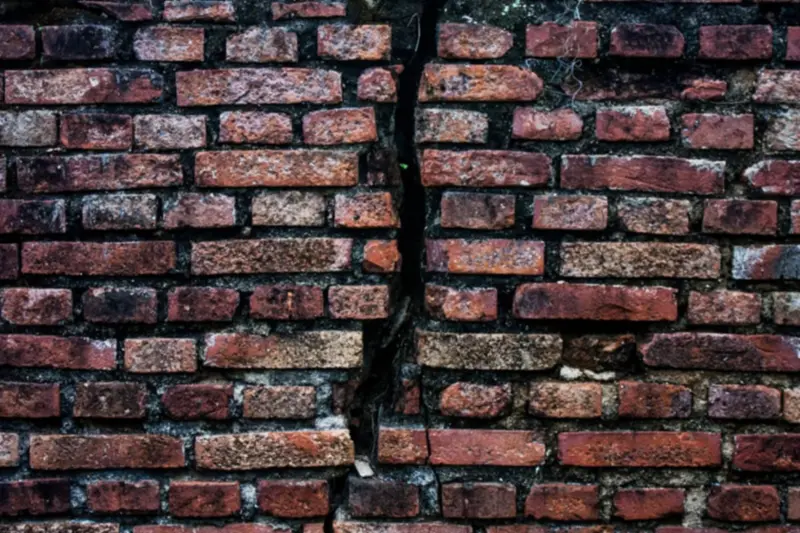
A crack that climbs a brick or block wall in steps, following the mortar joints, is one of the clearest signs of foundation movement. It is not always serious, but it is always worth understanding.
What you may notice
- Cracks zigzagging up through the mortar joints
- Cracks that are wider at the top or the bottom
- Bricks shifted out of line along a crack
- Cracks above windows and doors
- Gaps where brick meets window frames or trim
Tell us about the house
Cause first, then the fix
Cracks and sticking doors are symptoms. Every visit looks for what moved the house, usually water in clay soil, before anyone talks about piers.
Measured, not guessed
Floor elevations are taken across the house with a level, so the repair plan rests on numbers you can see and compare.
A written plan and price
The number of piers, where they go, any drainage work, engineer letters, permits and the warranty, listed line by line in writing.
Why brick cracks in steps
Mortar is weaker than brick by design. When a wall bends or stretches, the crack follows the weakest path, which runs along the joints. Because brick is laid in an overlapping pattern, with each brick centered over the joint below, that path climbs in steps.
Common causes
- Settlement: a corner or section of the foundation sinks. The crack often starts low near the corner and climbs, frequently wider at the top.
- Heave: clay swelling under part of the footing lifts it, cracking the wall in a different pattern, sometimes wider at the bottom.
- Rusted lintels: steel angles over windows and doors rust and swell, lifting the brick above and cracking the corners of the opening.
- Thermal and moisture movement: long brick walls expand and contract with the seasons, and without control joints they crack, often near corners and openings.
- Weak ties: veneer that is poorly tied to the framing behind it can bulge away from the house.
Veneer or structural brick
Most brick houses built in the Triangle since the middle of the twentieth century have brick veneer over wood framing. Cracks in veneer do not directly threaten the structure, but they reveal what the foundation is doing. Older houses may have solid brick walls, where cracks matter more, and brick piers and walls under the house that carry real load. See brick foundation repair.
Signs it is serious
- Any crack more than about a quarter inch wide
- Bricks displaced or rotated along the crack
- Cracks that reopen after repointing
- Matching interior cracks, sloping floors or sticking doors on the same side of the house
- A corner where the soil stays wet, a downspout empties or a large tree grows close by
Signs it is minor
- Hairline cracks in the mortar only
- Cracks above an opening where a rusty lintel is visible
- Old cracks that have stayed the same width for years
What to do first
- Photograph the crack with a ruler in the frame, and mark both ends with the date.
- Check the gutters and downspouts near it.
- Watch it for a few months, through a wet stretch and a dry one.
- If it grows, or it is already wide, have it inspected. See foundation inspection.
Repairs
- Stabilize the foundation if it is moving: piers under the settling section and better drainage. See foundation piers and foundation settlement repair.
- Repoint the cracked joints with mortar matched to the brick.
- Replace cracked or loose bricks.
- Repair or replace rusted lintels.
- Add control joints in long walls where thermal movement is the cause.
Keep water out behind the brick
Cracks let rain in behind the veneer, where it can rot sheathing and framing. Keep the weep holes at the base of the wall open and above the soil and mulch, and seal cracks once the movement has been dealt with. Pressure-washing brick hard can drive water into cracks and joints, so use low pressure on a cracked wall.
Brick on newer homes
On newer houses, veneer cracks usually turn up first at corners, under windows and where the brick steps down to follow the grade. A few hairline mortar cracks in the first year or two are common as the house settles. Report anything wider to the builder in writing while the warranty is active, with dated photos.
Cracks in block foundations
The same stair-step pattern shows up in concrete block crawl space walls and basement walls, often below a crack in the brick above. Block cracks are read the same way: stable hairlines are minor, while wide, offset or growing cracks point to movement. Inside a basement, a stair-step crack that meets a horizontal crack can mean the wall is bowing as well as settling. See bowing basement walls.
Stair-step cracks in brick — common questions
Are stair-step cracks in brick always a foundation problem?
Not always. Brick also cracks from rusted steel lintels over openings, from expansion in long walls without control joints, and from shrinkage. But a stair-step crack near a corner of the house is most often settlement or heave below.
Can I just fill stair-step cracks with mortar?
Repointing seals the crack and looks better, but if the foundation is still moving, the crack will reopen. Track it or have it evaluated before repointing, and match the new mortar to the brick.
Is cracked brick veneer dangerous?
Brick veneer on a wood-framed house is not structural, so most cracks are not dangerous. Badly bulging or loose sections can fall, though, and cracks let water in behind the brick, so they should not be ignored.
Other foundation problems
Not sure what is causing it?
Call and describe what you are seeing and where in the house, or send the details and someone will follow up.