Basement waterproofing in Cary, NC
Water gets into basements through cracks, the joint where the wall meets the floor, window wells and the wall itself. Waterproofing stops it by draining water away before it gets in, or by catching it at the base of the wall and pumping it out.
- Interior perimeter drains and sump pumps
- Leaking cracks injected
- Exterior membranes when walls are dug out
- Window wells and grading corrected
- Dehumidification for damp, not wet, basements
Covering Cary · Apex · Holly Springs · Morrisville · Raleigh
Get a quote for basement waterproofing
Cause first, then the fix
Cracks and sticking doors are symptoms. Every visit looks for what moved the house, usually water in clay soil, before anyone talks about piers.
Measured, not guessed
Floor elevations are taken across the house with a level, so the repair plan rests on numbers you can see and compare.
A written plan and price
The number of piers, where they go, any drainage work, engineer letters, permits and the warranty, listed line by line in writing.
Why choose us
Repairs that stop the movement, not just hide it
Triangle clay swells when it is wet and shrinks when it dries, and houses ride along. Finding why the house moved, supporting it on something that does not, and fixing the water behind it are what keep a repair from failing.
- Floor elevations measured
- Push and helical piers
- Engineer-backed plans
- Drainage fixed at the source
- Written, itemized estimates
- Local to Cary
Where basement water comes from
- Cracks in poured walls, and mortar joints in block walls.
- The cove joint, where the wall meets the floor slab. The two are poured separately, so the seam between them is one of the most common leak points.
- Through the wall itself. Hollow block cores can fill with water and seep out at the base.
- Window wells that fill up in a storm and leak around the window frame.
- Up through the slab when groundwater rises after long rains.
- Plumbing and appliances, which are worth ruling out first.
- Condensation: humid summer air condensing on cool walls and floors. It looks like seepage but needs a dehumidifier instead of a drain.
See water in the basement for how to trace a leak.
Start outside
Most basement water starts as roof and surface water. Gutters, downspouts and grading are the first and least expensive fixes, and sometimes the only ones needed. See foundation drainage.
Interior drain systems
The most common waterproofing for an existing basement works like this:
- A strip of the floor slab is cut away along the inside of the walls.
- A perforated drain pipe is laid in gravel beside the footing, sloping toward a sump basin.
- Small weep holes may be drilled in the bottom course of hollow block to drain the cores.
- A dimpled plastic membrane goes against the base of the wall so seepage runs down behind it into the drain.
- The floor is patched back with concrete.
- A sump pump in the basin lifts the water out and discharges it well away from the house.
These systems do not stop water from entering the wall. They control it before it reaches the floor, which is usually what matters.
Sump pumps
A sump pump needs a lidded basin, a check valve, and a discharge line that carries water well away from the foundation without draining back toward it. A battery backup is worth adding, because the heavy storms that fill the basin are the same storms that knock out power. Test the pump before hurricane season by pouring a bucket of water into the basin and watching it cycle.
Crack injection
A leaking crack in a poured concrete wall can be sealed by injecting polyurethane, which expands to fill the crack through the wall. It is a targeted fix for one leaking crack rather than seepage across a whole wall. See foundation crack repair.
Exterior waterproofing
Excavating the outside of the walls allows a waterproof membrane to be applied, drainage board added and a footing drain installed. It is the most complete fix and is often combined with straightening or rebuilding a bowing wall, but it means digging up landscaping, walkways and sometimes decks. See basement wall repair.
Walk-out basements and hillside lots
Many basements in the Triangle are walk-outs on sloping lots, with the back wall at ground level and the front wall buried. The buried uphill wall takes most of the water, and water often follows the side walls downhill. A curtain drain uphill and good drainage along the sides are common parts of the fix.
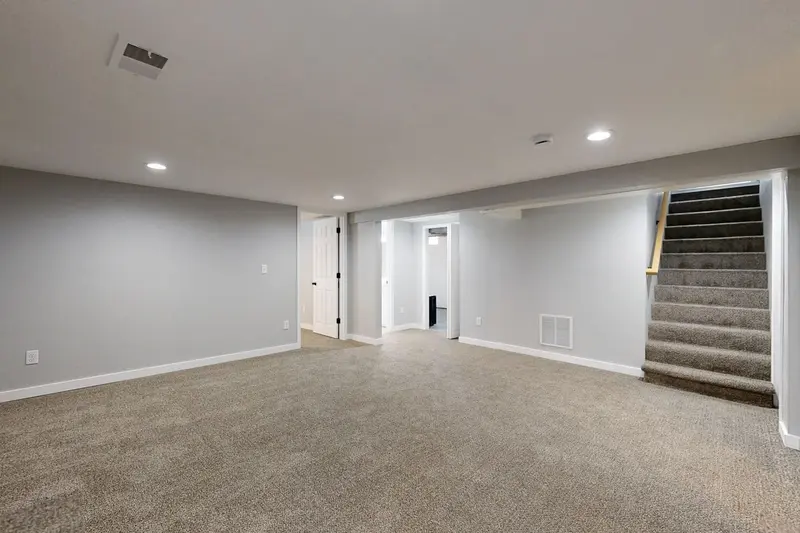
Before finishing a basement
Deal with any water first, because a basement that is dry in April can leak in a wet August. Use moisture-tolerant materials near the floor, keep a dehumidifier running through the humid months, and do not trap moisture behind finishes on below-grade walls. Finishing over a damp wall hides the problem and feeds mold behind the drywall.
What waterproofing costs
Prices depend on the length of wall, whether the basement is finished, how many sump pumps are needed and whether any excavation is involved. Fixing gutters and grading costs the least; interior drains cost more; exterior excavation costs the most. The cost guide covers how quotes are put together.
Basement waterproofing — common questions
Is interior or exterior waterproofing better?
Exterior waterproofing stops water before it reaches the wall but means excavating around the foundation, which is costly and disruptive. Interior drain systems manage water that gets through the wall and are far less disruptive. For most existing homes, an interior drain plus outside drainage fixes is the practical choice.
Do waterproof paints work on basement walls?
They can reduce dampness on walls with minor seepage, but they do not hold back water under pressure, and they blister and peel when water builds up behind them. They are not a fix for a wall that actively leaks.
How can I tell condensation from a leak?
Tape a square of aluminum foil or plastic tightly to the wall and leave it a day or two. Moisture on the room side of the foil means condensation from humid air; moisture underneath it means water is coming through the wall.
Problems this fixes
Often booked with this