Foundation repair: a homeowner's guide for the Triangle
Most foundation problems in the Triangle come down to clay and water. This guide walks through how houses here are built, why they move, the signs to watch for, every common repair, what it costs and how to choose who does the work.
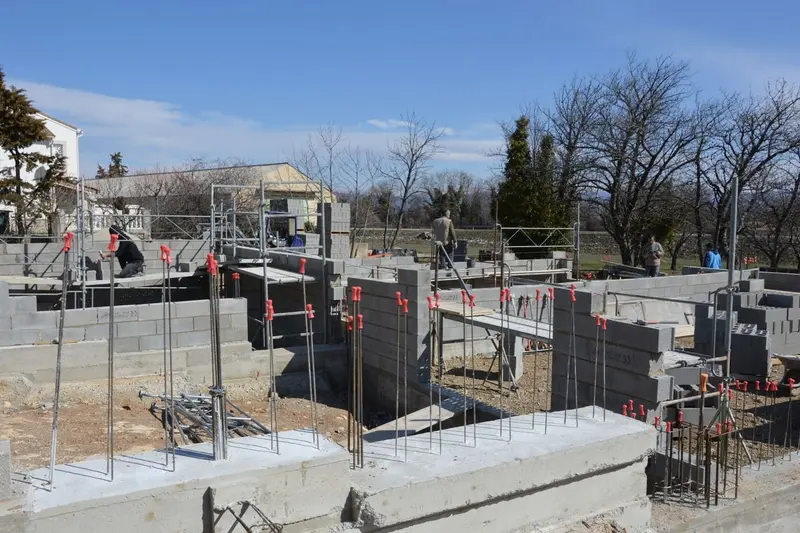
How Triangle houses are built
Houses in the Triangle stand on one of three kinds of foundation, and each one moves, and gets repaired, in its own way:
- Crawl space. The most common foundation in North Carolina. A perimeter wall of block or brick sits on a continuous concrete footing, and rows of interior piers hold up girders that carry the wood floor framing, which stands about 18 inches or more above the soil.
- Slab on grade. Concrete poured directly on the ground, with thickened edges serving as the footing. It is common in townhomes and in many newer single-family neighborhoods.
- Basement. Block or poured concrete walls holding back soil, found in older Raleigh houses, on hillside lots with walk-out basements, and in some newer homes.
Footings here are generally shallow. The building code requires exterior footings to sit at least 12 inches below undisturbed ground, and many are not much deeper than that, which puts them in the layer of soil that changes most with the weather.
Why foundations move here
Clay that shrinks and swells
Much of the Triangle is built on clay. Some of it is fairly stable red clay that barely changes volume, but some of it swells noticeably when it soaks up water and shrinks when it dries. The worst of it is concentrated in the Triassic basin, a belt of sedimentary rock that runs from Durham through Morrisville and the Research Triangle Park toward Sanford, where USDA soil surveys rate several soil types high or very high for shrink-swell. The clay soils guide explains the geology.
Water in the wrong places
Uneven moisture does the damage. A downspout emptying at one corner, a yard graded toward the house, a sprinkler soaking the foundation, or a slow leak under a slab keeps one area of clay much wetter than the rest. Over years of wet and dry seasons, that difference cracks walls and tilts floors.
Drought and trees
Long dry spells shrink clay, and large trees make it worse by drawing water out of the soil near the house. A corner near a big oak can drop during a drought while the rest of the house stays put.
Fill and backfill
Lots are graded before houses are built, and fill soil that was not compacted well keeps settling. The strip of ground dug out around every foundation is backfilled loosely too, which is why patios, steps and walks so often sink.
Age and construction
Older houses may sit on brick piers with tiny footings, while newer ones can have piers set on fill or girders that span too far. Wood shims rot, mortar wears out, and steel lintels rust. Time finds the weak points.
Warning signs
Each of these has its own page explaining what it means and what fixes it:
- Cracks in the foundation: vertical, diagonal, horizontal or stair-step
- Stair-step cracks in brick and block
- Drywall cracks running from the corners of doors and windows
- Sloping floors you can feel underfoot
- Sticking doors and windows that will not latch or lock
- Bowing basement walls with horizontal cracks
- A leaning chimney pulling away from the house
- Sinking concrete slabs: patios, steps, walks and garage floors
- Water in the basement after heavy rain
- Cracked crawl space piers under a sagging floor
One sign alone rarely means much. Several on the same side of the house usually tell a story.
What to do first
- Document it. Photograph each crack with a ruler in the frame, and note when you first noticed it.
- Check the water. Walk around the house in a heavy rain and watch the gutters, downspouts and grading.
- Track it. Mark the ends of cracks with a pencil and the date, and recheck over a few months.
- Get it measured. If cracks grow, or floors slope noticeably, book a foundation inspection with floor elevations.
Repairs for a settling house
- Foundation settlement repair: finding the cause, supporting the house and fixing the water.
- Foundation piers: steel push or helical piers that carry the house down to stable soil.
- House leveling: lifting settled sections back toward level, slowly and carefully.
Repairs by foundation type
- Slab foundation repair: settled edges, interior voids and plumbing leaks under the slab.
- Crawl space foundation repair: sinking and cracked piers, new footings and girder repairs.
- Basement wall repair: carbon fiber, steel braces and wall anchors for bowing walls.
Cracks and masonry
- Foundation crack repair: injection, stitching and sealing.
- Brick foundation repair: repointing, pier rebuilding, lintels and veneer.
Water and concrete around the house
- Foundation drainage: downspouts, grading and French drains.
- Basement waterproofing: interior drains, sump pumps and membranes.
- Concrete leveling: lifting sunken patios, walks, steps and garage floors.
Matching the sign to the repair
| What you see | Likely cause | Usual repair |
|---|---|---|
| Diagonal cracks at a corner, floor sloping toward it | Perimeter footing settling | Piers, then drainage |
| Floor dipping toward the middle of a crawl space house | Interior piers or girder sinking | Pier rebuilding, new supports |
| Horizontal crack in a block basement wall | Soil pressure | Straps, braces or anchors |
| Hump in the middle of a slab floor | Heave, or settled edges | Survey first, then moisture control or piers |
| Gap between chimney and house | Chimney footing settling | Piers under the chimney |
| Patio tilting toward the house | Backfill settling, water | Foam lifting or mudjacking |
| Water along the base of basement walls | Surface water, high groundwater | Drainage, interior drain and sump |
Push piers or helical piers
Both are steel and both reach stable soil, but push piers rely on the weight of the house to drive them, while helical piers are screwed in and suit lighter loads. The push vs helical piers guide compares them in detail.
What it costs
National cost guides put a typical foundation repair at roughly $2,200 to $8,200, crack sealing at about $250 to $800, and steel piers at about $1,000 to $3,000 each, with full piering projects running $10,000 to $40,000. Drainage fixes cost far less than any of these and should come first. The foundation repair cost guide has the full breakdown, including what drives a quote up or down.
Insurance
Standard homeowners policies exclude settling, cracking and earth movement, which covers most foundation problems. Sudden events, such as a burst pipe that washes soil out from under a slab, can be different. The insurance guide explains the exceptions.
Permits and engineers
Structural repairs generally need a building permit from the town or county, and inspectors can require a sealed letter from a licensed engineer. Even where it is not required, an independent engineer’s evaluation before the work and a letter after it are the best documentation you can have. They protect you if the work is questioned, and they reassure buyers when you sell.
Buying or selling
In North Carolina, foundation questions usually come up during the due diligence period of a sale, which is short. Buyers should book an engineer the moment a home inspector notes movement, and sellers do well to have records of any past repairs ready. Buying a home with foundation issues walks through each step.
Choosing a contractor
Get an independent diagnosis, compare two or three bids for the same scope, check licenses and insurance, and read the warranty closely. The hiring guide covers the questions to ask and the red flags to watch for. If you are not sure which cracks matter yet, start with the guide to when cracks are worth worrying about.
Preventing problems
Most of what protects a foundation is routine maintenance:
- Clean gutters at least twice a year, after the spring pollen and the fall leaves.
- Pipe downspouts well away from the house, not onto a splash block at the wall.
- Keep the ground sloping away from the foundation, about 6 inches over the first 10 feet.
- Keep mulch and soil below the siding and weep holes, and do not let beds trap water against the walls.
- Aim sprinklers away from the house.
- Plant large trees well away from the foundation.
- Watch the water bill; a jump with no explanation can mean a leak under the house.
- Keep the crawl space or basement dry.
- Walk around the house once a year looking for new cracks, and compare them with last year’s photos.
Small habits like these cost little, and they protect both the house and any repair that has already been made.
Foundation repair guide — common questions
What is the most common cause of foundation problems in the Triangle?
Water changing the moisture of the clay under part of a house, usually because of downspouts, poor grading, plumbing leaks or large trees. The clay swells when it is wet and shrinks when it dries, and footings move with it.
How do I know if my foundation problem is serious?
Signs of serious movement include cracks wider than about a quarter inch or offset, horizontal cracks in basement walls, floors that slope noticeably, doors and windows that suddenly bind, and any of these getting worse over time.
Does foundation repair hurt resale value?
Unrepaired problems hurt resale far more than repaired ones. A documented repair with an engineer's letter, permits and a transferable warranty usually reassures buyers and their lenders.
More foundation repair guides
Want the house looked at?
Call and describe the cracks, floors or doors that worry you, or use the form and a local pro will be in touch.