Bowing basement walls: why they move and how to stop it
A basement wall that bows inward is being pushed by the soil outside it, usually wet clay. It rarely fails suddenly, but it keeps moving until something changes, and the repair gets bigger the longer it waits.
What you may notice
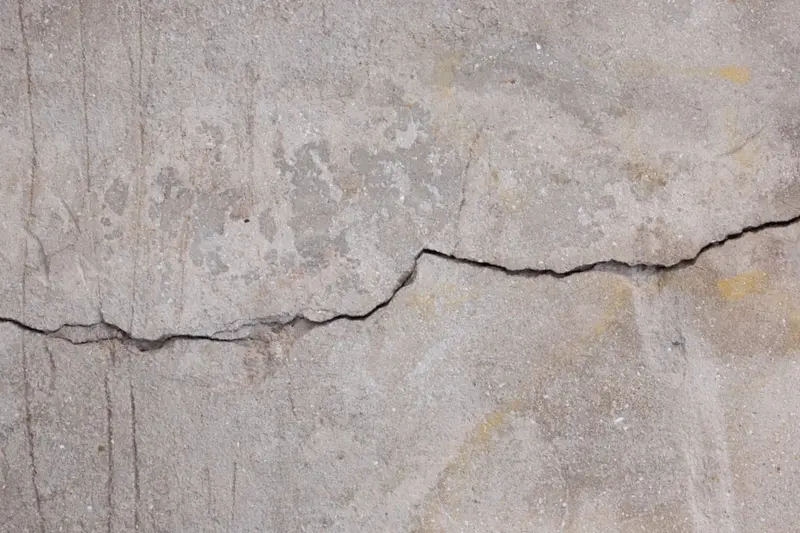
- A horizontal crack along a block joint or across a poured wall
- A wall that bulges inward when you sight along it
- Stair-step cracks near the ends of the wall
- The bottom of the wall sliding in past the slab
- Water seeping through the cracks after rain
Tell us about the house
Cause first, then the fix
Cracks and sticking doors are symptoms. Every visit looks for what moved the house, usually water in clay soil, before anyone talks about piers.
Measured, not guessed
Floor elevations are taken across the house with a level, so the repair plan rests on numbers you can see and compare.
A written plan and price
The number of piers, where they go, any drainage work, engineer letters, permits and the warranty, listed line by line in writing.
What is pushing on the wall
Soil pushes sideways on any wall that holds it back. Dry, well-drained soil pushes a manageable amount. Saturated soil pushes much harder, because water adds its own weight and pressure, and expansive clay adds swelling pressure as it soaks up water. The push is greatest low on the wall, which is why block walls usually crack and bow around their middle or just below it.
Common contributors:
- Downspouts emptying beside the wall
- Yards that slope toward the house
- Footing drains that are clogged, crushed or missing
- Backfill of clay rather than free-draining gravel
- Driveways, heavy equipment or additions close to the wall
- Tree roots and thirsty plantings along the wall
How bowing progresses
- A horizontal crack appears along a mortar joint, or across a poured wall.
- The wall begins to bulge inward at the crack.
- Stair-step cracks show up near the corners as the wall rotates.
- The bottom may slide inward past the floor slab, or the top may tip in.
- In severe cases, blocks shear and the wall can give way.
Most walls take years to get from step one to step three, but wet years speed things up, and every season of movement makes the eventual repair larger.
Measuring it yourself
Stretch a string line tight from corner to corner along the wall, or hold a long straightedge against it vertically, and measure the gap at the worst point. Write the number down with the date, and recheck after a stretch of wet weather. The amount and rate of movement help decide which repair fits.
Repair options
- Carbon fiber straps for walls with modest bowing, stopping further movement.
- Steel wall braces anchored at the floor and the framing above, some of them adjustable.
- Wall anchors running through the wall to plates in the yard, tightened over time.
- Excavation and rebuilding for walls that have moved too far or slid at the base.
See basement wall repair for how each one works and what it costs.
Relieve the pressure too
Bracing a wall without reducing the water against it leaves the force in place. Redirect downspouts, regrade so water runs away from the wall, and consider exterior or interior drainage. See foundation drainage and basement waterproofing.
Bowing walls and the house above
The basement wall supports the house. As the wall moves, the floor framing sitting on it can shift, the sill plate can slide, and doors upstairs may begin to stick. If the top of the wall has moved, the connections between the wall and the framing should be checked as part of the repair.
Walk-out basements
On sloping Triangle lots, walk-out basements have one buried wall facing uphill and side walls that are buried at one end and open at the other. The uphill wall takes the most pressure and the most water, and the side walls often crack diagonally where the buried section meets the exposed one. Those diagonal cracks deserve the same attention as horizontal ones.
What not to do
Do not fill a horizontal crack with caulk or hydraulic cement and call it fixed; that hides the movement without stopping it. Do not stack heavy storage against a bowing wall, or park heavy equipment close to it outside. And do not dig along the outside of the wall yourself to relieve the pressure, because removing soil unevenly can let a weakened wall shift suddenly. Leave excavation to a crew that braces the wall first.
Buying a house with a bowed wall
A bowed basement wall is a common finding in home inspections of older houses. Get an engineer’s evaluation during the due diligence period, and repair bids before you decide. The steps are laid out in buying a home with foundation issues.
Bowing basement walls — common questions
Is a bowing basement wall an emergency?
Usually not an emergency, but not something to leave either. Walls typically move over seasons and years. If the wall is moving quickly, leaning in at the top, or letting in a lot of water, have it evaluated right away.
Why is my block wall bowing when my neighbor's poured wall is not?
Block walls are built of hollow units joined by mortar and have little resistance to bending along their joints. Poured concrete walls, especially reinforced ones, resist the same pressure better and usually crack before they visibly bow.
Does homeowners insurance cover a bowing basement wall?
Usually not. Soil pressure and gradual movement fall under the earth movement and wear exclusions in most policies. The insurance guide covers the exceptions.
Other foundation problems
Not sure what is causing it?
Call and describe what you are seeing and where in the house, or send the details and someone will follow up.