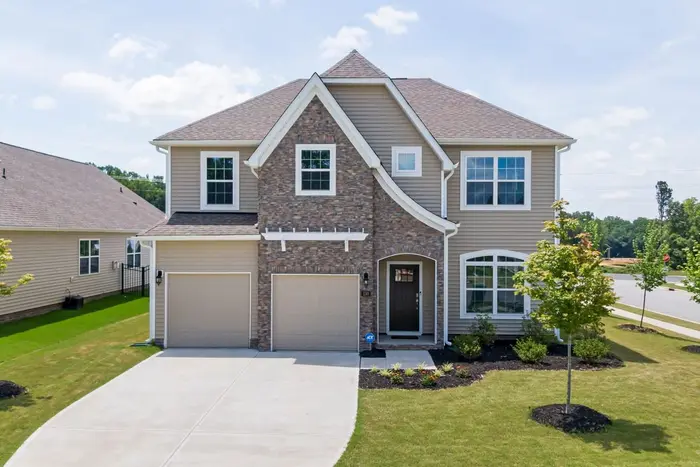
Foundation settlement repair in Cary, NC
When part of a house sinks, the cracks, sloping floors and sticking doors are only the symptoms. A lasting settlement repair finds out why the soil gave way, supports the house on something that will not, and fixes the water that started it.
- Floor elevations measured across the whole house
- The cause traced, from downspouts to plumbing leaks
- Steel piers to stable soil where they are needed
- Drainage corrected so it does not happen again
- Written plan, permit and transferable warranty
Covering Cary · Apex · Holly Springs · Morrisville · Raleigh

Get a quote for foundation settlement repair
Cause first, then the fix
Cracks and sticking doors are symptoms. Every visit looks for what moved the house, usually water in clay soil, before anyone talks about piers.
Measured, not guessed
Floor elevations are taken across the house with a level, so the repair plan rests on numbers you can see and compare.
A written plan and price
The number of piers, where they go, any drainage work, engineer letters, permits and the warranty, listed line by line in writing.
Why choose us
Repairs that stop the movement, not just hide it
Triangle clay swells when it is wet and shrinks when it dries, and houses ride along. Finding why the house moved, supporting it on something that does not, and fixing the water behind it are what keep a repair from failing.
- Floor elevations measured
- Push and helical piers
- Engineer-backed plans
- Drainage fixed at the source
- Written, itemized estimates
- Local to Cary
What foundation settlement looks like
Settlement means one part of a house has sunk lower than the rest. Because it almost never happens evenly, it shows up as a pattern rather than a single sign:
- Diagonal cracks running up from the corners of doors and windows, inside and out
- Stair-step cracks in brick veneer or block foundation walls
- Floors that slope toward one wall or corner
- Doors that rub at the top, will not latch, or swing open on their own
- Gaps where trim, cabinets or countertops pull away from the walls
- A chimney, porch or front steps separating from the house
One of these on its own often means very little. Several of them on the same side of the house usually point to one corner or wall that has dropped. The foundation cracks and sloping floors pages explain how to read each sign.
Why houses settle in the Triangle
Most houses here stand on spread footings set only a foot or two into the ground, often not much deeper than the 12 inches below undisturbed soil that the building code requires. That puts them inside the layer of clay that changes most with the weather: it swells in wet spells and shrinks in droughts. The usual triggers:
- Water concentrated in one spot. A downspout that empties at a corner, a gutter that overflows, a low spot that ponds after storms, or a leaking water or sewer line keeps the clay under one footing soaked.
- Drying under part of the house. Large trees close to the house pull moisture out of the clay in summer, and a long dry spell shrinks it unevenly.
- Fill soil. Building lots are graded, with soil cut from high ground and pushed into low ground. Fill that was not compacted properly keeps settling for years, and a house that straddles cut and fill can settle unevenly.
- Undersized supports. In crawl spaces, brick and block piers on small footings slowly sink or crack under the load.
The clay soils guide explains why some Triangle lots move far more than others.
Diagnosis comes first
A sound settlement repair starts with an inspection, not a pier count:
- Floor elevations. A digital level or laser is used to take readings in every room, building a map of high and low areas. The pattern shows which part of the house moved and by how much.
- Crack mapping. Where the cracks are, how wide they are, and which way they run, inside and out.
- Water review. Gutters, downspouts, grading and irrigation, and sometimes a plumbing leak test on slab houses.
- The structure. Footings, walls, piers and framing, checked from the crawl space or basement where there is one.
The result should explain the cause in plain language. If a contractor proposes piers without explaining why the house moved, get a second opinion, ideally an independent foundation inspection by a structural engineer.
Repair options
What the house needs depends on the cause and the foundation type:
- Steel piers under the affected footings, driven or screwed down to soil that does not move with the seasons. See foundation piers.
- Lifting on those piers, recovering as much of the drop as the house allows. See house leveling.
- Crawl space supports: new piers, footings and girder repairs under the floor. See crawl space foundation repair.
- Slab repairs for houses built directly on concrete. See slab foundation repair.
- Drainage fixes, which belong in every settlement job. See foundation drainage.
Small settlement that has stopped may need nothing more than the water fixed, the cracks sealed and a few months of watching.
What a typical pier job involves
For a common repair along one side of a house:
- Soil is dug out beside the footing at each pier location, or small openings are cut in a slab.
- Steel brackets are fastened to the footing, and piers are installed to a recorded depth and pressure or torque.
- The weight of that section is transferred onto the piers, and the house is raised where it can be.
- The holes are backfilled and compacted, and the yard or floor is restored.
- Elevations are measured again and recorded.
Most of these jobs take one to three days, and families usually stay in the house throughout.
Permits, engineers and paperwork
Structural repairs generally need a building permit from the town, and inspectors can ask for a sealed letter from a licensed engineer. Even where it is not required, an engineer’s letter describing the problem and the repair is worth having when you sell, because buyers, their inspectors and lenders will ask. Keep the permit, the engineer’s letter, a map of where each pier went and the warranty in one folder. Many pier warranties transfer to the next owner, which helps at resale.
What settlement repair costs
The price depends on how many piers are needed, how easy they are to reach, the foundation type and how much drainage work comes with it. National cost guides put individual piers at roughly $1,000 to $3,000 each and whole-house piering at $10,000 to $40,000, though many settlement repairs cover only one corner or wall. The foundation repair cost guide breaks the numbers down.
When to act
Settlement that has stopped can wait for a convenient time. Settlement that is still moving tends to cost more the longer it goes, as cracks widen, doors and windows rack further and plumbing lines strain. Mark both ends of a crack with a pencil line and the date, and if it grows over a season, book an inspection.
Foundation settlement repair — common questions
Is some foundation settling normal?
Yes. Most houses settle slightly in their first few years as the soil under the footings compresses, which leaves hairline cracks and a door or two to adjust. Settlement that keeps going, opens cracks wider than about a quarter inch or tilts floors you can feel is not the normal kind.
Can a settling foundation be fixed without piers?
Sometimes. If the movement is small and driven by water, fixing the drainage and letting the soil stabilize may be all it needs, followed by cosmetic repairs. Piers make sense when a section has dropped noticeably, keeps moving, or rests on soil that cannot carry it.
Will the repair put my house back to level?
Piers stop further settlement and can often recover part of the drop, but a house that has been out of level for years rarely goes back perfectly. Lifting stops when cracks begin to close or the structure resists, so the repair does not cause new damage.
Problems this fixes
Often booked with this