Cracks in the foundation: causes, risks and repairs
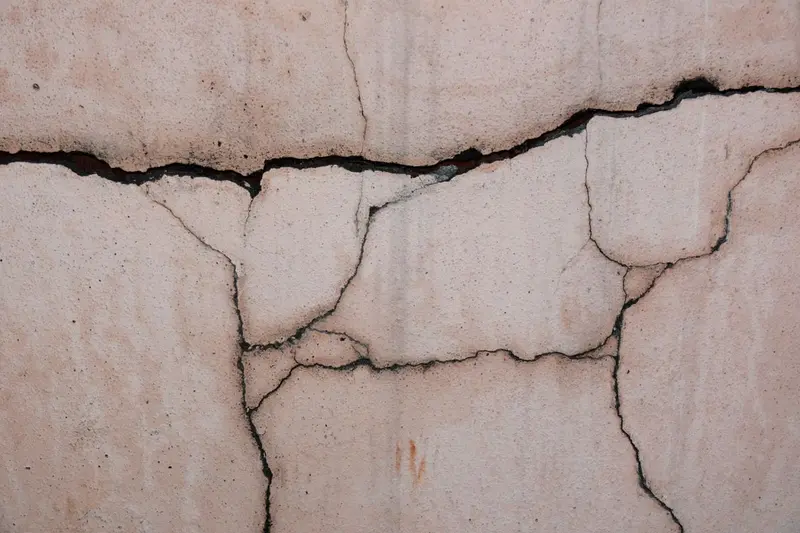
Nearly every foundation cracks somewhere. The width, direction and pattern of a crack, and whether it is still growing, tell you whether it is harmless shrinkage or a sign that the house is moving.
What you may notice
- Thin vertical cracks in a poured basement or crawl space wall
- Diagonal cracks that are wider at one end
- Horizontal cracks across a basement wall
- Stair-step cracks in block or brick
- Water, soil or daylight showing through a crack
Tell us about the house
Cause first, then the fix
Cracks and sticking doors are symptoms. Every visit looks for what moved the house, usually water in clay soil, before anyone talks about piers.
Measured, not guessed
Floor elevations are taken across the house with a level, so the repair plan rests on numbers you can see and compare.
A written plan and price
The number of piers, where they go, any drainage work, engineer letters, permits and the warranty, listed line by line in writing.
Why foundations crack
Concrete and masonry are very strong when squeezed but weak when pulled or bent. A foundation gets pulled, bent and squeezed throughout its life, so cracks are close to inevitable. The main causes:
- Shrinkage. Concrete shrinks as it cures and dries out. Poured walls and slabs crack to relieve that stress, usually in thin vertical lines.
- Settlement. When part of the foundation sinks, the wall bends over the low spot and cracks, often diagonally and wider at one end.
- Heave. Clay swelling under part of a footing or slab lifts it, cracking walls and floors in the opposite pattern to settlement.
- Soil pressure. Saturated or swelling soil pushes on basement walls, causing horizontal cracks and bowing.
- Concentrated loads and weak spots. Beams bearing on one point of a wall, cold joints where a pour was interrupted, and corners where a wall changes direction.
Reading the crack
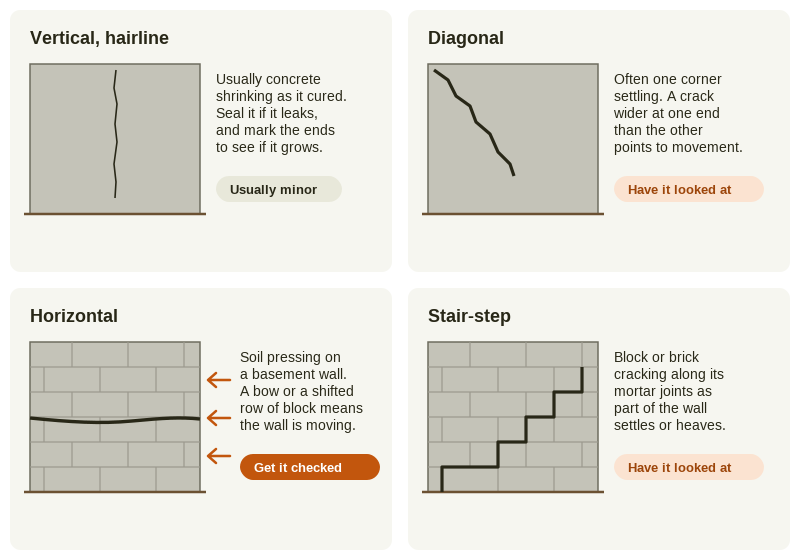
Vertical cracks
Usually shrinkage, especially when they are thin, roughly even in width and sit near the middle of a wall section or below a window. They mostly matter if they leak.
Diagonal cracks
Often one corner or end of a wall settling. A crack that is wider at the top usually means the end of the wall dropped; wider at the bottom can mean the middle dropped or the end was pushed up.
Horizontal cracks
In basement and retaining walls, a sign of soil pressure from outside. Watch for bowing, and have it evaluated rather than simply sealed. See bowing basement walls.
Stair-step cracks
In block and brick, cracks that climb along the mortar joints, from settlement or heave. See stair-step cracks in brick.
Width and offset
Width matters, but movement matters more. A practical way to sort cracks:
- Hairline, too thin to fit a fingernail into: usually cosmetic.
- Up to about an eighth of an inch: common in older foundations; seal it if it leaks and keep an eye on it.
- Over about a quarter of an inch: worth an evaluation.
- Offset, with one side higher or pushed further out than the other: a sign of movement at any width.
Is it still moving?
The best evidence is time. Draw a pencil line across each end of the crack and write the date beside it, then measure the width at one marked spot with a ruler or a plastic crack gauge. Recheck every month or two through a wet season and a dry one. A crack that grows past its marks, or new cracks appearing nearby, means the movement is active. Photos with a ruler in the frame make the comparison easy and give a contractor or engineer something concrete to look at.
Cracks inside the house
Foundation movement often shows up above the foundation first: diagonal cracks running from the corners of doors and windows, cracks where walls meet ceilings, and doors that stop latching. If you find foundation cracks, look for these too, on the same side of the house. See drywall cracks and sticking doors and windows.
How cracks get fixed
- Shrinkage cracks that leak: polyurethane injection from inside.
- Structural cracks in poured walls: epoxy injection, sometimes with carbon fiber stitches across the crack.
- Block and brick: repointing the joints and replacing cracked units.
- Active movement: stopped first, with piers, wall bracing or drainage work, and sealed afterward.
See foundation crack repair for how each method works.
Cracks in crawl space walls
Crawl space walls crack too, but they are easy to miss because nobody goes down there. Look along the inside of the perimeter wall with a flashlight, especially at corners and below the fireplace. Cracks in a crawl space wall are read the same way as basement cracks, though horizontal cracks are less common because these walls hold back little soil.
When to call
Book an inspection if a crack is wider than about a quarter inch, offset, horizontal in a basement wall, leaking, or growing, or if cracks come with sloping floors or sticking doors. The guide to which cracks matter goes further, and a foundation inspection will measure the house to show whether it is still moving.
Foundation cracks — common questions
How wide does a foundation crack have to be to worry about?
Hairline cracks are common and usually cosmetic. Cracks wider than about a quarter inch, or any crack where one side sits higher or further out than the other, deserve an inspection, as does a crack of any width that keeps growing.
Do foundation cracks get worse over time?
Shrinkage cracks usually stop growing within the first couple of years. Cracks caused by settlement, heave or soil pressure can keep widening for as long as the cause continues, often in steps after unusually wet or dry seasons.
Can I sell a house with foundation cracks?
Yes, but buyers and their inspectors will ask about them. North Carolina sellers complete a disclosure statement, and an engineer's letter explaining the cracks, along with records of any repairs, usually keeps a sale on track.
Other foundation problems
Not sure what is causing it?
Call and describe what you are seeing and where in the house, or send the details and someone will follow up.